Protein is one of the most important nutrients for anyone who wants to build muscle and recover faster after workouts. When you train, your muscles experience small tears. To repair these tears and grow stronger, your body needs enough protein every day.
In this article, you will discover the best high-protein foods for muscle growth and recovery, learn how protein works in the body, and understand how to use it correctly to improve your fitness results. The information is simple, clear, and easy to follow for everyone.
Why High-Protein Foods Matter for Muscle Growth
Protein plays a key role in muscle repair and growth. After training, your body starts a process called muscle protein synthesis. During this process, protein helps rebuild muscle fibers and makes them stronger than before.
In addition, protein supports many other important functions in the body. It helps maintain muscle mass, improves recovery, and reduces muscle soreness after intense workouts.
Main Benefits of Protein
- Helps muscles recover after exercise
- Supports muscle growth and strength
- Reduces muscle soreness
- Helps prevent muscle loss during weight loss
- Improves overall training performance
For this reason, protein should be a daily priority for active people.
How Much Protein Do You Need?
Protein needs depend on your body weight, activity level, and fitness goals. While everyone needs protein, athletes and people who train regularly need more than average.
General Protein Guidelines
- Sedentary adults: 0.8 g per kg of body weight
- Active individuals: 1.2–1.6 g per kg
- Muscle growth: 1.6–2.2 g per kg
For example, a person who weighs 70 kg and wants to build muscle may need between 110 and 150 grams of protein per day.
Best High-Protein Foods for Muscle Growth
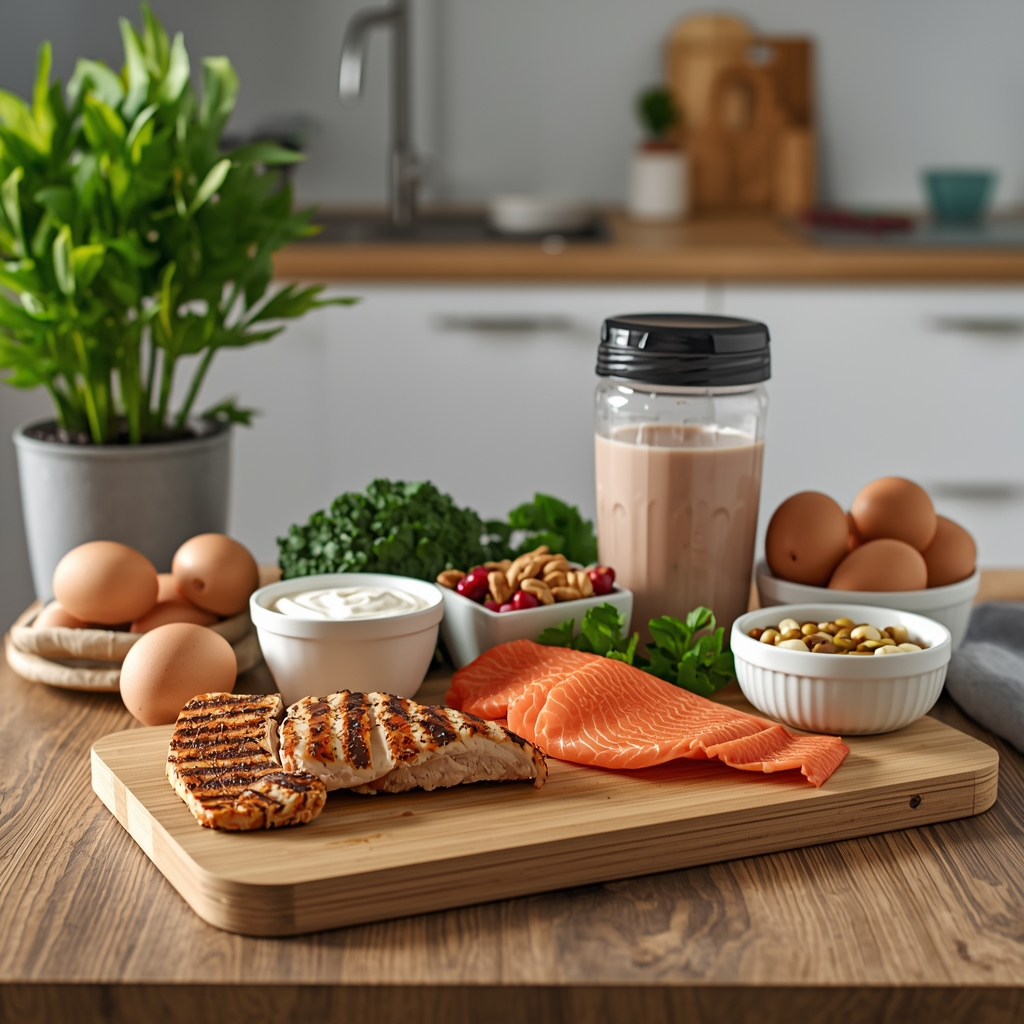
Below are some of the best high-protein foods for muscle growth and recovery. These foods are easy to find, affordable, and effective.
1. Eggs
Eggs are one of the best natural protein sources available. They contain all the essential amino acids your muscles need.
- Protein content: about 6 g per egg
- Easy to digest
- Rich in leucine, which supports muscle growth
As a result, eggs are ideal for breakfast or post-workout meals.
2. Chicken Breast
Chicken breast is a popular food in fitness diets. It is high in protein and low in fat.
- Protein content: about 31 g per 100 g
- Supports lean muscle growth
- Easy to cook in many ways
In addition, chicken breast is perfect for post-workout recovery meals.
3. Greek Yogurt
Greek yogurt contains more protein than regular yogurt. It also supports gut health.
- Protein content: about 10 g per 100 g
- Contains both fast- and slow-digesting proteins
- Helps muscle recovery
For best results, choose plain and unsweetened Greek yogurt.
4. Fish (Salmon, Tuna, Sardines)
Fish is an excellent protein source and also provides healthy fats.
- Protein content: 20–25 g per 100 g
- Rich in omega-3 fatty acids
- Helps reduce inflammation
Therefore, fish supports both muscle recovery and overall health.
5. Lean Red Meat
Lean beef is rich in protein and important minerals like iron and zinc.
- Protein content: about 26 g per 100 g
- Supports strength and muscle growth
- Helps maintain energy levels
However, it is best to choose lean cuts to avoid too much fat.
6. Cottage Cheese
Cottage cheese is a slow-digesting protein food. It is especially useful before sleep.
- Protein content: about 11 g per 100 g
- High in casein protein
- Supports overnight muscle recovery
As a result, it is a great option for evening snacks.
7. Protein Powders
Protein powders are a convenient way to increase daily protein intake.
- Protein content: 20–25 g per scoop
- Ideal after workouts
- Easy to prepare
For example, whey protein absorbs quickly, while casein digests slowly.
8. Legumes (Lentils, Chickpeas, Beans)
Legumes are great plant-based protein sources.
- Protein content: 8–10 g per 100 g cooked
- High in fiber
- Affordable and filling
In addition, combining legumes with grains improves protein quality.
9. Nuts and Seeds
Nuts and seeds provide protein and healthy fats.
- Protein content: 5–7 g per serving
- Support hormone health
- Easy to add to meals
However, they should be eaten in moderation due to high calories.
10. Tofu and Tempeh
Tofu and tempeh are excellent protein options for vegetarians.
- Protein content: 15–20 g per 100 g
- Complete plant protein
- Easy to cook
As a result, they are ideal for plant-based muscle growth diets.
High-Protein Foods for Muscle Growth After a Workout
After training, your body needs protein to repair muscles.
For this reason, good post-workout foods include:
- Whey protein shake
- Chicken with rice
- Eggs with whole-grain toast
- Greek yogurt with fruit
Try to eat protein within 30–60 minutes after your workout.
Protein Timing for Better Results
Protein timing can improve muscle recovery and growth.
- Morning: helps stop muscle breakdown
- Post-workout: supports fast recovery
- Before bed: helps overnight repair
Therefore, spreading protein evenly across the day works best.
Common Protein Mistakes
Many people make simple mistakes when it comes to protein intake.
- Relying only on supplements
- Ignoring plant-based protein sources
- Eating too much protein but too few calories
- Forgetting carbs and healthy fats
For best results, protein should be part of a balanced diet.
Final Thoughts
Choosing the best high-protein foods for muscle growth and recovery is essential for building strength and improving fitness results. Whole foods like eggs, chicken, fish, dairy, legumes, and lean meat should be the base of your diet.
Most importantly, stay consistent with your nutrition, training, and rest. When these elements work together, muscle growth and recovery become much easier and more effective.